

By Marley Farmer

As our society advances, artificial intelligence advances with it. What once started as an academic field in 1956 at the Dartmouth Conference has blossomed into a resource that informs millions. As beneficial as that knowledge is, AI has been a topic of conversation for some time now. Some users are content with their results, while others have grown weary of AI platforms’ very existence. The users argue that artificial intelligence has made daily life easier. Those against AI counter that the technological advances and the easier lifestyle AI provides are not worth the price the environment pays.
To fully understand the scope of this debate, both sides must be considered. Pro-AI users tend to focus on the benefits the resource brings. As some teachers from the Gunston School have collectively stated, “AI is my friend. My friend who helps me get the job done. It is very useful when curating homework.”
When interviewing some students, they shared a similar sentiment. Claiming the app is very helpful when explaining difficult concepts they didn’t understand in class. On average, 22%-69% of students in America use ChatGPT during the school day. About 50% of American teachers utilize it daily as well. But at what cost? What is the true cost of this technological convenience?
Megan Hook, a junior at the University of Maryland School of Public Policy, has spent her time in school studying the costs of using AI. And it has everything to do with the environment.

Her research taught her that supporting generative AI requires extracting natural resources such as minerals and water from the Earth. Due to how frequently generative AI is used, unsustainable amounts of water and minerals have been taken. As of 2025, it is estimated that between 312.5 billion and 765 billion liters of water have been used to cool the machines used for AI.
Megan Hook believes that the issue does not lie solely in how much water is being used, but in the fact that there are currently no regulations requiring companies to recycle the resources they have extracted. “At the moment, there aren’t too many companies that are actually recycling. Or attempting to recycle the water that they use for cooling purposes.”
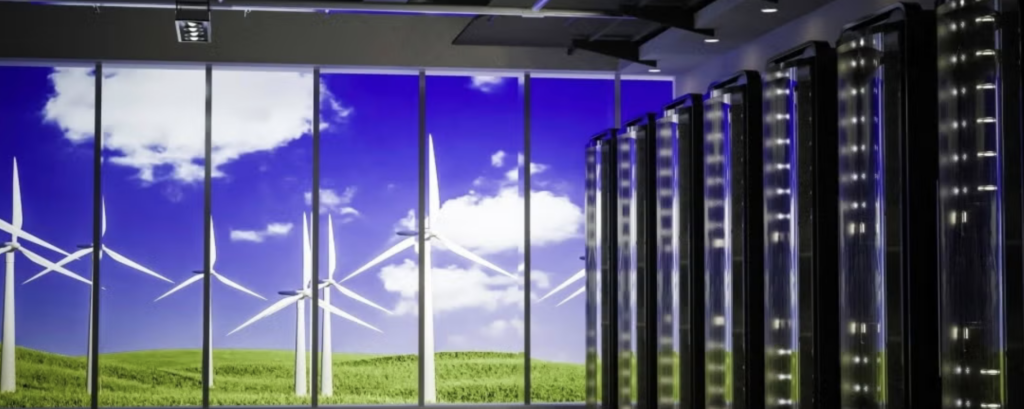
AI power plants have increased the production of greenhouse gases currently in the atmosphere. Raising concerns regarding air pollution. If renewable resources like solar power aren’t used, air quality is projected to worsen by 2028.
If acted on quickly, there is still hope for repairing the damage done to the environment. The most immediate and effective courses of action are to reduce personal use of AI and reach out to local government officials. By not asking ChatGPT a question, a single person can save up to 500ml of water. Reaching out to local government officials can speed up the process of having regulations placed on AI power plant companies. Which in turn would reduce air pollution and allow the Earth to replenish the resources that have been taken from it.