
By: Seven Taylor
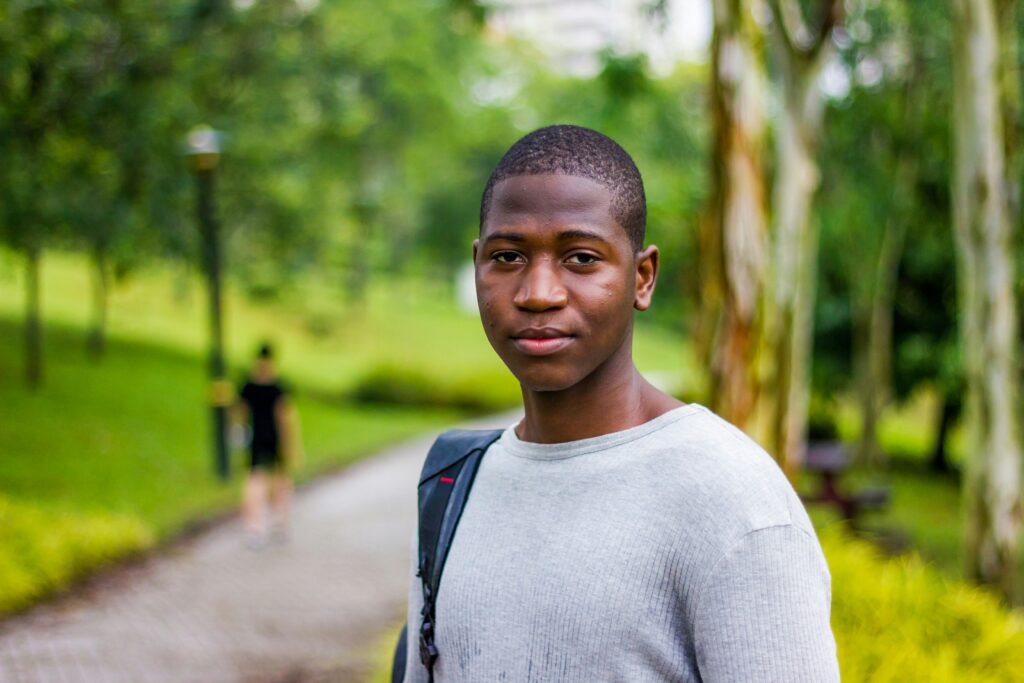
Growing up, Jerry Fuller had the best role models anyone could think of.
Both his parents graduated from college, and Fuller could have followed in their path. However, by his sophomore year, he decided to go in a different direction.
“I realized college wasn’t for me in about 10th grade,” said Fuller, who is now 19 years old.
Fuller is just one example of a trend of Black men choosing an alternate route to success.
At colleges in the U.S., Black male students today make up a smaller share of the student body than they did decades ago. Black male student enrollment dropped about 22% from 2010 to 2022, according to a study in U.S. News & World Report. At Historically Black Colleges and Universities (HBCUs), the issue is just as alarming. Black men make up about one in four students, a 13% drop from the 1970s
Statistics make it clear that Black men aren’t pursuing higher education at the rate they once were. There are multiple reasons that explain this trend.
For many students, these decisions are shaped by a variety of factors, such as financial pressures, high school preparation and perceptions of education.
Fuller, who graduated from Ron Brown College Preparatory High School (RBHS) in Washington, D.C., with a 3.1 GPA, is a firm believer that school just isn’t for him. He worried about the loans he would’ve had to take out at such a young age.
“It’s a lot of work, and it is a huge cost and people usually don’t recover from their debt,” he said. “I didn’t want to get into a lot of debt that I would have to pay off for the rest of my life.”
Fuller isn’t alone.
Clifford Curry is looking forward to graduating, but his post-high school plans aren’t what he always envisioned.
Even though he was accepted to multiple colleges, including Howard University and Temple University, he’ll instead be anxious to find out which military branch he will join upon leaving RBHS. Because scholarship money wasn’t adequate and he was worried about going into debt, enlisting in the Coast Guard or Air Force is Curry’s backup plan.
“Most of my family members went to the military, so, like, I just thought it would be right for me to just go to the military,” the 17-year-old said. “And in the military you could still get your, you know, degree and stuff in the military, and you’ll have money in your pocket.”
Dr. Arman Lakes, an expert in education policy, thinks it’s an outdated expectation that everyone has to go to college.
Currently a redesign coordinator at RBHS where he leads school improvement initiatives, Lakes has seen shifting educational pursuits among Black male students in the past decade.
“We saw the shift after we returned from COVID,” said Lakes, who earned his PhD in educational leadership and policy studies from Howard University.
“We’re putting other options in front of them … they’re able to make a more informed decision about what they want to do afterwards.”
As part of its efforts to expose students to alternate career paths, RBHS offers Career Technical Education (CTE) Pathways. Students can earn certifications in a range of specialties, from creative roles like photography to technical skills like computer science. People can make good money without having to go to college, Lakes said.
“If I passed Adobe, I am Adobe certified. I can go right now and freelance and take pictures, edit pictures, I could do movies, I can do all of that,” he said. “In the time and space that we’re in. Everybody is on social media, everybody needs a reel, a clip, or something.”
Fuller took that alternative step. Instead of following in his parents’ footsteps, the Washington, D.C., native enrolled in the city’s Fire Cadet Program. The program also includes emergency medical services training.
“Not everybody is blessed with this opportunity at 19 years old,” he said.
Still, the door to college isn’t fully closed for Fuller.
“I still feel like I will end up going to college, just later on down the road.”